
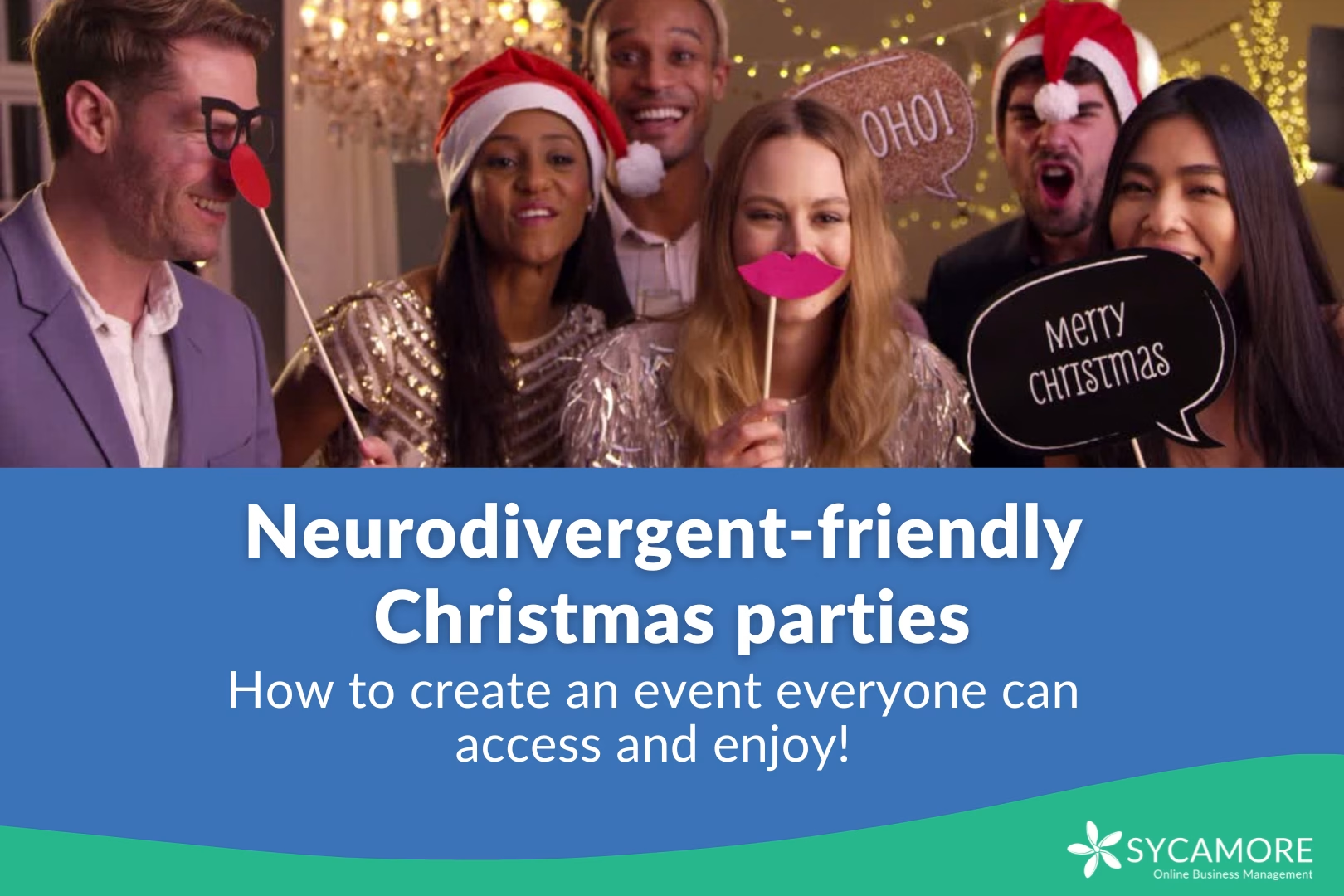
As explored in our previous blog, Surviving Christmas Parties, the festive season brings with it lots of challenges for neurodivergent individuals. Christmas parties are the norm in business, but how can you make sure that everyone’s needs are accommodated?
Can we host a completely inclusive, neurodivergent-friendly Christmas party?
Short answer: You can’t.
This is no glib statement. The adage “When you’ve met one autistic person, you’ve met one autistic person” is apt. You will never meet all people’s needs all the time.
You can, however, try your darndest to create an inclusive event that everyone can access and enjoy.
Preparation
Ensure that all attendees receive the following well in advance, with frequent reminders:
- Venue name, address, times etc. Provide photos if possible
- Tips on travel, taxi numbers for return journeys etc.
- Guest/attendee list.
- Menu – see more below.
- Dress code – consider making this relaxed – formal wear is not sensory-friendly for many within the neurodivergent community.
- An outline of entertainment provided, timing, music, layout.
- Ask your attendees what they need in order to attend without conflict or energy loss.
- Plan a quiet space that isn’t an after-thought. Make it a considered, curated and comfortable place that anyone could enjoy, not just your neurodivergent colleagues, but ensure it is used correctly, and doesn’t become party overspill
- Remove expectations of attendance. Parties are OPTIONAL.
Food and drink
Eating and drinking in new and unfamiliar settings is a daunting prospect for many neurodivergent people. ARFID (Avoidant/Restrictive Food Intake Disorder) often co-exists with Autism, ADHD and other neurodivergence. Even in the absence of ARFID, familiarity and consistency of food and drink can be of incredible comfort to, for example, an Autistic person who needs to know what they’re getting, each time, without variation, or to anyone with ADHD who are hyper-focusing on certain foods, or to Dyslexic people who can misread or misinterpret menus.
ADHD impulsivity, social anxiety, sensory seeking and neurodivergent masking can result in neurodivergent people eating or drinking ‘too much’, which at least makes their bodies uncomfortable, and at worst, puts them in danger. While you cannot ‘police’ people’s intake, you have a duty of care to understand that, in order to ‘fit in’ with neurotypical peers, your neurodivergent colleagues are vulnerable to behaviours that they would never usually consider, or that provide a more instant dopamine hit or sensory feedback, and you may need to keep a non-condescending eye on their welfare.
Suggestions:
- Ensure a wide variety of foods with clear descriptions and ingredients. Remember to include ‘beige’ or ‘golden’ foods – there is always a place for a chicken nugget!
- Ensure the food offered covers all dietary requirements. Advocating for your gluten free/vegan/dairy-free diet is hard enough without doing in in a high-pressure, MUST HAVE FUN situation.
- A really good variety of non-alcoholic drinks.
- A ‘pot luck’ or bring-your-own buffet, so that each attendee can at least be assured of one thing they like, or that meets their dietary requirements (ie. the dish they bring).
- Ensure the venue is ok with somone bringing food from ‘outside’. If the venue does not ‘allow’ this, do not use the venue!
- Consider not offering food at all to avoid doubt (but remind people to eat beforehand!)
- Remove the expectation that food should be communal, shared, around a table. Lots of neurodivergent folks like to eat in private, would rather not share, and want to avoid the artifice of the dinner table
- If someone says they don’t want to eat or drink, accept this without question.
Music & Entertainment
Tastes in neurodivergent individuals are as varied as their neurotypical peers. One Autistic person might dislike loud music, another might actively seek out the sensory input of amplified sound. Variety is the key.
Suggestions:
- Allocate time-slots or different spaces to loud music or quiet music, that way people can plan their time around it.
- Plan for breaks in music and flashing lights, which can be incessant.
- Remove the expectation of quiet and stillness, e.g. for dinner speeches, performers or presentations. A lot of neurodivergent folks need to move in order to focus.
- Do not put people on the spot. Ensure that, for example, magicians or entertainers are aware that certain colleagues would find it excruciating to be singled out or targeted.
- Remove competitive elements focused on individual achievements.
- If there will be a gift exchange/Secret Santa of some kind, bring along a couple of generic ‘spare’ gifts to avoid shaming anyone who forgot, or who was too unsure of what to bring.
- Consider offering name badges to assist with recall, or conversation-starter prompts, but do not do ice-breaker activities, which pretty much everyone in the world loathes and detests with a passion. FACT.
Managing Energy
Social activities can be a significantly larger energy ‘drain’ on neurodivergent people than their neurotypical peers. Societal norms, small-talk, and new or unfamiliar surroundings will exhaust some people much, much more than others. Protecting and holding space for this is essential.
Suggestions:
- Build in ‘buffer’ time pre-and-post party. Do not insist that people go straight from the work environment to the party – transitions are hard. Likewise, do not insist on presenteeism the morning after a party. Allow time for rest and regulation.
- Recognise that the change in routine in itself is dysregulating.
- Consider a (non-enforced, entirely opt-in) ‘buddy system’ for those that find travel, or arrival at a new venue, or socialising overwhelming or scary.
- Expect the unexpected, open your mind to nuance. What is taxing for one might enliven another. Be prepared for awesome dancing and outfits, but do not proffer the party animals any more or less praise than those struggling to assimilate into party-mode.
Do not decide for other people. Always invite them, even if they never come.
Most importantly
Do not question anyone’s need to not attend, ‘step away’ while they’re there, go to a quiet space, not partake of karaoke battles, or Sambuca shots, or limbo dancing, or to LEAVE.
‘No’ is a complete sentence.
Allow people to manage their energy and perceive ‘fun’ in their own unique and important ways.

0 Comments